Signum Fidei
Faith & Zeal Projects
Sacred Music for Lasallians, by Lasallians
Explore the forgotten musical legacy and tradition of the De La Salle Brothers with Bryan.
About Signum Fidei
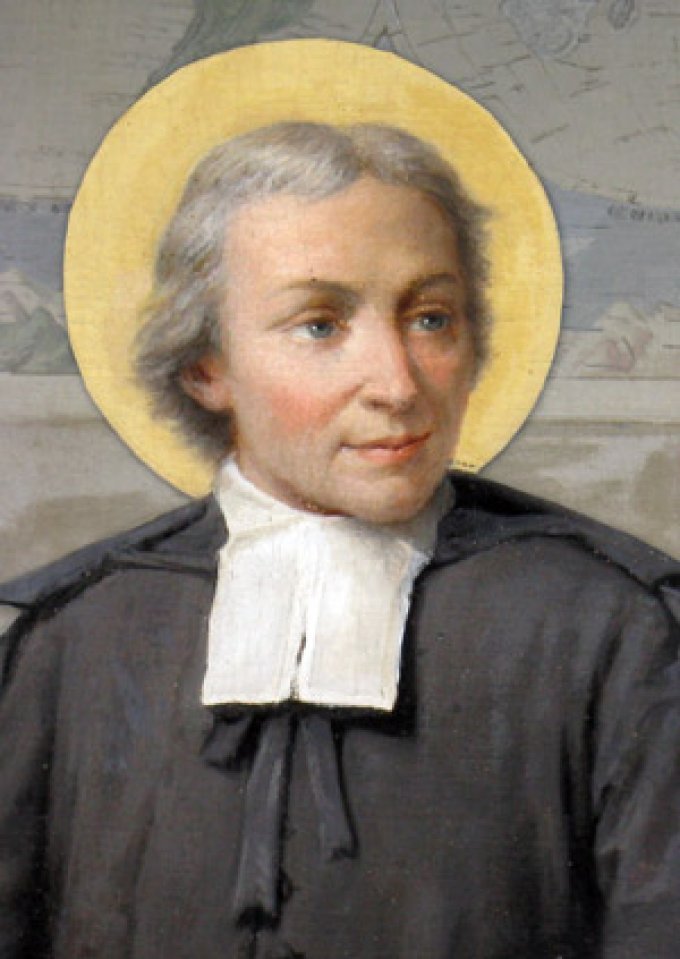
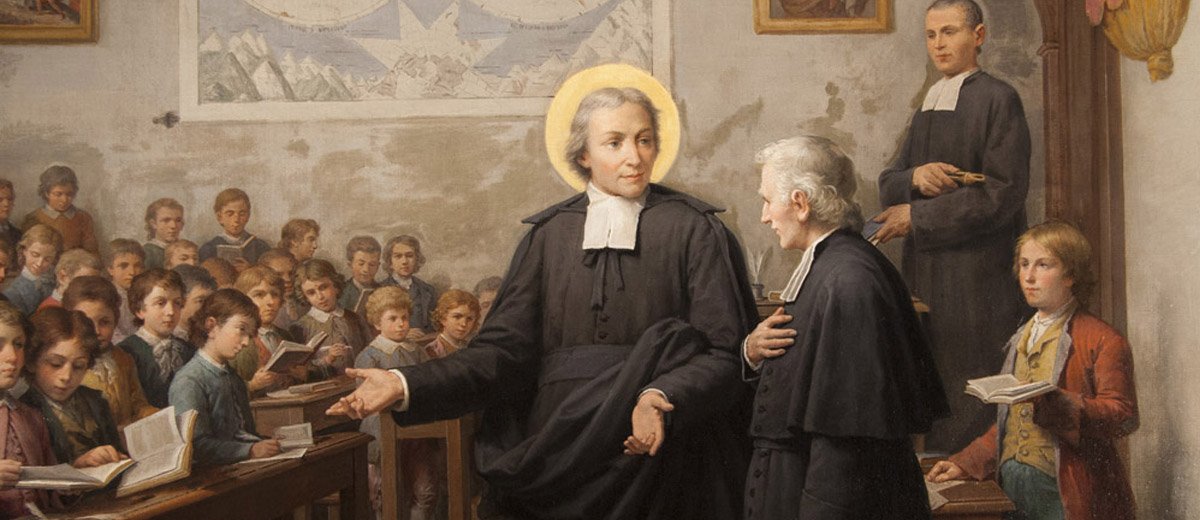
The Institute of the Brothers of the Christian Schools, founded by St. Jean Baptiste de La Salle (hence the widely known name De La Salle Brothers) is a Roman Catholic lay religious congregation which holds a crucial role within the Church to carry their education initiatives worldwide.
The Brothers were well known to be generalist teachers, however, some were exceptionally talented in music, forming their own special Lasallian music traditions in Italy, France and the United States in the later half of the 19th Century.
Here Bryan shares his findings on the history of Lasallian music and provides his critical music editions, sacred and secular.
Acknowledgements
Many thanks to archivists within the United States & French Lasallian communities who were very helpful in navigating the scope of this project by examining and searching for Lasallian musical material.
Disclaimer
This project is an independent project and not officially affiliated with any Lasallian institution.
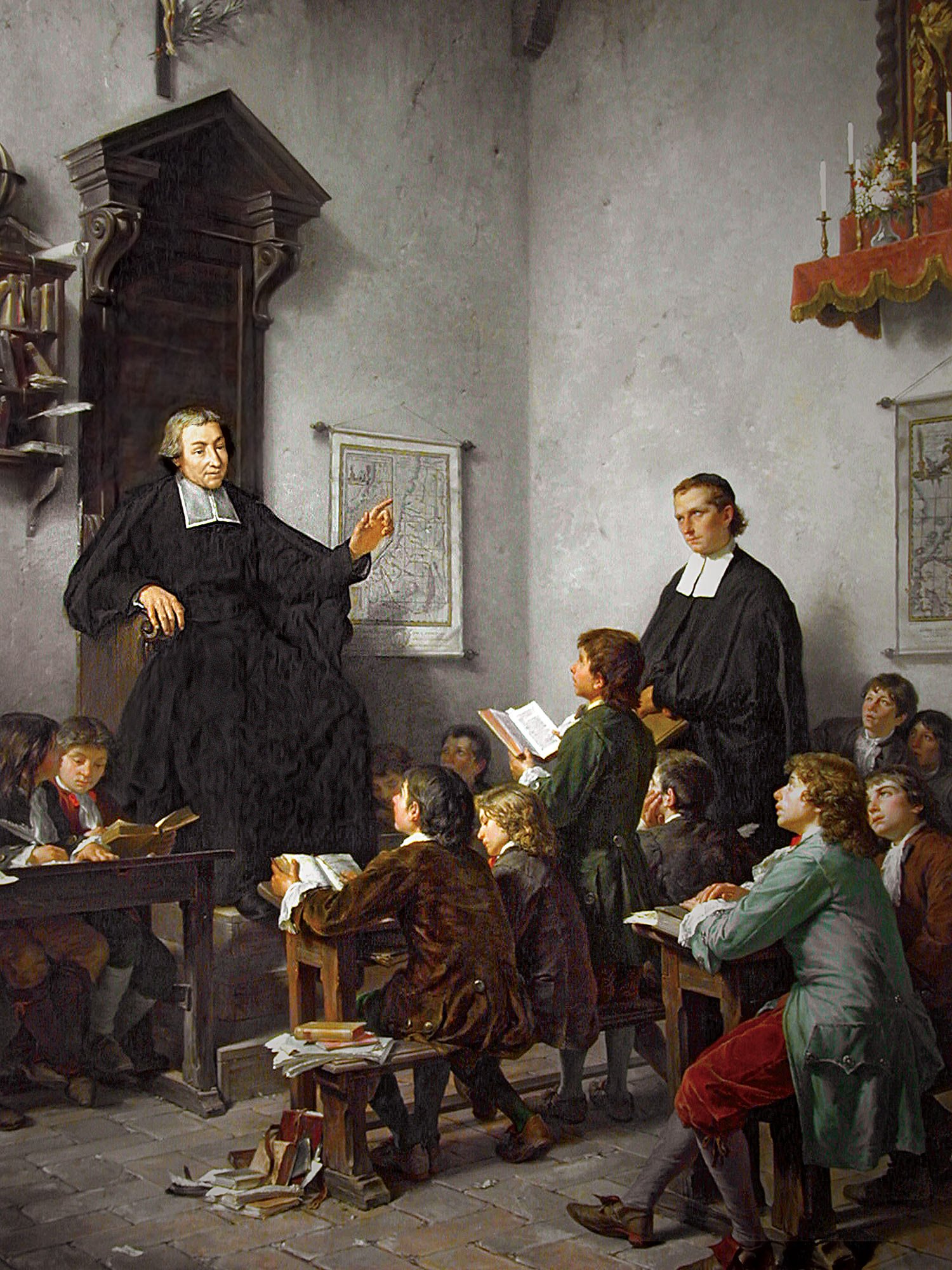
The French Lasallian Tradition
Music in the French Lasallian tradition was one of the most sophisticated and recognised at the turn of the century. Output by two talented Brothers, both sacred and secular works achieved popularity in its own right. Sacred works include keyboard works, orchestral mass settings and cantatas.
Albert-des-Anges Ricque FSC (1842 – 1914)
Born Albert Louis Armand, a French Lasallian, Frère Albert-des-Anges was an organ virtuoso who began assisting the music life at the Lasallian boarding school in Passy at the end of the academic year 1867/8. He was a composer of sacred music to great beauty and sophistication, earning the admiration and respect from his contemporaries such as Alexandre Guilmant, Charles Widor, Theodore Dubois &c.
Below is a list of available sheet music for downloading, free of charge.
O sacrum convivium (for 2 Treble Voices & Organ)
O sacrum convivium! in quo Christus sumitur: recolitur memoria passionis eius: mens impletur gratia: et futurae gloriae nobis pignus datur. Alleluia.
O sacred banquet, in which Christ is received, the memory of his Passion is renewed, the mind is filled with grace, and a pledge of future glory is given to us. Alleluia.
Ave verum Corpus (for Choir & Organ)
Hail, true Body, born of the Virgin Mary,
having truly suffered, sacrificed
on the cross for mankind,
from whose pierced side
water and blood flowed:
Be for us a sweet foretaste
in the trial of death.
O sweet Jesus, O holy Jesus,
O Jesus, son of Mary,
you have mercy on us. Amen.
Have a look at a recent performance at the Catholic Chaplaincy of the Holy Name, 2025.
O quam suavis est (for Solo Voice & Organ)
Léonce Giscaro FSC (1819 – 1909)
Born Augustin Giscaro (Giscares), Frère Léonce was a music teacher and composer at the Lasallian Penionnat de Passy, being Frère Albert-des-Anges predecessor before his rapid decline in health after 1865. Frère Léonce’s compositions during his prime won admiration of many; discourse within the General History of the Lasallian Brothers (edited by authoratative French historian Geroges Rigault) suggested that the famous opera composer Gioachino Rossini, who lived in the proximity of the school, was an admirer of these works.
Below is a list of available sheet music for downloading, free of charge.
Organ Works from Le trésor des chapelles
A few organ voluntaries are presented in a mid-19th Century publication series of French organ works. Frère Léonce’s works were compiled into its inaugural volume.
The American Lasallian Tradition
Music in the American Lasallian tradition was built on the foundation of metric hymns.
From the earliest days of Christianity, the Church employed sacred music as a most powerful agent to awake piety and enkindle fervour; thus imparting a relish for the truths of salvation, inspiring sorrow for sin, a salutary fear for the judgement of God, and confidence in His mercy.
Preface to The Catholic Youth’s Hymn Book, 1871
Samuel FSC (18?? – 19??)
Identified as a composer of hymn tunes by American hymnologist Vincent J. Higginson.
Below is a list of available sheet music for downloading, free of charge.
Mary, Star of the Sea
A Marian hymn with text extracted from a set of poems and prose called Evenings in Greece by Thomas Moore (1770 – 1852).
See a recent performance, 2025.
Wenzel Albert Raboch (1854 – 1942)
Wenzel Albert Raboch was an organist and violinist with some significant achievements as a musician in the United States that were forgotten by the world. Born in Vienna to a Czech family, at 9 years old, he came to New York and mastered the instruments that became the core of his musical career. (Expand the tab for a full biography)
He earned a bachelor of science degree in civil engineering at the City College of New York before graduating with a master of arts, presumably majoring in music, at the Jesuit College of St. Francis Xavier.
Raboch has served in various catholic churches as an organist, including St. Michael’s, St. Chrysostom’s and St. Mary the Virgin. He also carried out duties as a choir trainer and conductor. Raboch was an active violin performer as well. He was the soloist for the 1892 New York premiere of Dvorak’s Violin Concerto 1st and 2nd movements (See the article by Marusa Zupančič titled Contribution of Prague violinists to the Musical Life in Europe and the United States during World War I, published 2020.)
Given his virtuosity, Raboch was reputable and well-connected. Interestingly, in 1898 Raboch was acquainted with theosophists for the promotion of music and arts. He worked closely with Katherine A. Tingley, the Isis League of Music and Drama founder under the Universal Brotherhood, a prominent Theosophy organisation in his time. A performance of his Music Drama, The Eumenides was detailedly recorded in the newsletter Universal Brotherhood (1898).
As an educator in higher institutions, Raboch is connected to the Lasallian community in the United States through his position as a Professor of Music at Manhattan College since 1900. He probably composed his two melodic settings of Glorious Patron and Mass in honour of St. John Baptist de La Salle during his tenure. According to the New York Times (1942), Raboch lectured mathematics and romance languages at City College of New York and Fordham University besides music.
He passed away on 18th July 1942 at his New York home. Some of his music survived, though rarely performed.
Below is a list of available sheet music for downloading, free of charge.
Glorious Patron (Two Hymn Tunes)
Two of many settings of the text. Tune 2 is especially remarkable and remains in circulation among Lasallian Institutions in Asia.
Luke of Mary Lauer FSC (1838 – 1900)
Born Nicolas Lauer, he was composer of several hymns within The Catholic Youth’s Hymn Book, an American Lasallian publication executed by the publisher P. O’Shea (New York) in 1871.
Below is a list of available sheet music for downloading, free of charge.
Hail Mary! Queen and Virgin Meek
Bonitus Schiesser FSC (1819 – 1872)
Brother Bonitus’ identity was verified through one of the history chronicles of the American Lasallians titled The Christian Brothers in the United States: 1848 – 1948; A Century of Catholic Education. He was born in Württemberg, Germany in 1819; and entered the Lasallian novitiate in Montreal in 1852. In a compilation of biographies and obituaries of Lasallian Brothers covering 1838 – 1900, a suggestion was made that he left several handwritten manuscripts.
More coming soon.
Project Blog: Explore to Learn More
Posts
-
When Evening Shades are Falling…
Posted on
modified on
-
Theodore Dubois
Posted on
modified on
-
Signum Fidei: Blog Relaunch
Posted on
modified on